
Introduction
The spring manufacturing industry is undergoing a significant transformation in 2026, propelled by advancements in technology, sustainability efforts, and evolving market demands. Manufacturers are embracing cutting-edge solutions to enhance efficiency, precision, and environmental responsibility.
AI and Automation: Revolutionizing Production
Artificial Intelligence (AI) and automation have become integral to modern spring manufacturing processes. AI-powered quality control systems enable real-time defect detection, ensuring higher product reliability and reducing waste. Automation streamlines production lines, allowing for increased output and consistency. These technologies collectively enhance operational efficiency and product quality.
Sustainable Materials and Eco-Friendly Practices
Environmental sustainability is at the forefront of industry innovations. Manufacturers are adopting eco-friendly materials and processes to reduce their carbon footprint. The use of recycled metals and biodegradable coatings is becoming more prevalent, aligning with global efforts to promote green manufacturing practices.
Advanced Coiling Technologies
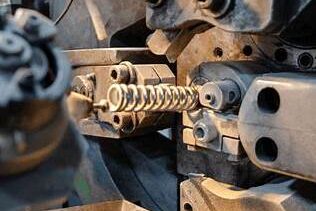
Advancements in coiling machinery have led to the development of high-precision spring production. Modern coiling machines offer enhanced control over spring dimensions and properties, resulting in products that meet stringent specifications. These technologies also allow for greater customization to cater to specific application requirements.
Additive Manufacturing and 3D Printing
Additive manufacturing, particularly 3D printing, is revolutionizing the production of complex spring geometries. This technology enables rapid prototyping and the creation of springs with intricate designs that were previously unattainable through traditional methods. It also reduces material waste and shortens development cycles.
Integration of Smart Materials
The incorporation of smart materials, such as shape memory alloys (SMAs), is expanding the functional capabilities of springs. SMAs can return to a predefined shape when subjected to specific stimuli, offering applications in industries requiring responsive components. This innovation opens new avenues for spring applications in advanced engineering fields.
Conclusion
The spring manufacturing industry in 2026 is characterized by technological integration, sustainability, and innovation. Embracing AI, automation, sustainable materials, advanced coiling, additive manufacturing, and smart materials positions manufacturers to meet evolving demands and maintain a competitive edge. These advancements not only improve product quality and efficiency but also contribute to a more sustainable and responsive manufacturing landscape.