
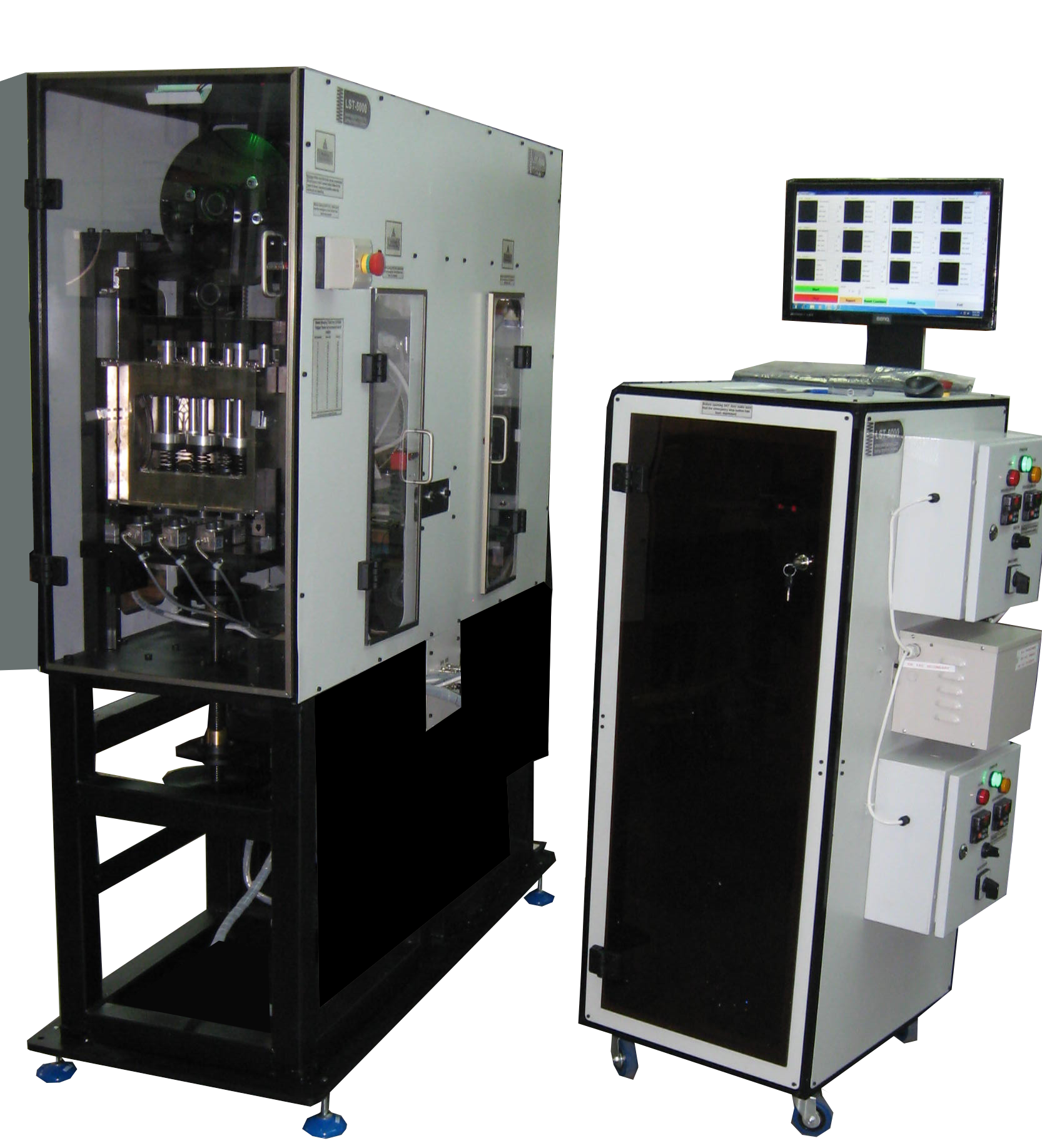
Springs seem simple. A coil of wire that compresses, extends, or twists. In static loading scenarios, they’re nearly bulletproof. But the real world isn’t static. Every application involving springs—automotive suspension, valve assemblies, medical device actuation, industrial machinery—subjects them to cycles. Thousands of them. Millions, sometimes. And that’s where fatigue becomes critical.
Spring fatigue testing isn’t about whether a spring works under one load. It’s about whether that spring will still work after it’s been loaded, unloaded, and cycled thousands of times. Get this wrong, and your springs fail in the field. Get it right, and you ship products that outlast customer expectations.
Understanding Spring Fatigue
Fatigue in materials science isn’t a sudden failure. It’s progressive. Each loading cycle introduces microscopic stress concentrations in the material. Wire surface defects, material inconsistencies, and residual stresses all become nucleation points for cracks. Over time, these cracks propagate. Eventually, the spring loses function or breaks entirely.
The challenge is that a spring might perform perfectly under static load testing but catastrophically fail after a few thousand cycles. This is why static load testing alone is insufficient for most applications. You need to understand how a spring behaves across its entire service life, not just at the moment it’s manufactured.
The Difference Between Static and Fatigue Testing
Static testing measures how much force a spring can withstand at a specific deflection point. You compress or extend it once, take a reading, and you’re done. This tells you about initial performance, but it says nothing about durability.
Fatigue testing is continuous cycling. You apply a load, remove it, apply it again, remove it—thousands of times per hour. The equipment tracks changes in spring force, deflection, or other properties across those cycles. You’re looking for when (or if) the spring degrades, when it relaxes, or when it fails outright.
The difference in insight is enormous. A compression spring might measure at 500 N of force when tested statically. But after 100,000 cycles, it might settle to 490 N due to stress relaxation. If your application needs that full 500 N to function, you’ve got a problem that static testing never would have caught.
Why Life-Cycle Analysis Matters
Consider an automotive valve spring. It cycles thousands of times per minute. Over a vehicle’s 200,000-mile lifespan, that’s billions of cycles. A valve spring that fails in the field isn’t just a product defect—it’s an engine misfire, a liability claim, a warranty replacement, and reputational damage.
Life-cycle analysis prevents this. By subjecting a representative sample of springs to a fraction of their real-world cycle count in a controlled environment, you can predict field performance before the product ships.
This applies whether you’re designing springs for automotive, aerospace, medical, or industrial applications. Any product with cyclic loading demands fatigue testing.
How Fatigue Testing Works
Modern fatigue testing systems apply loads at controlled frequencies—typically 5 Hz to 30 Hz, depending on the tester and the application. The equipment measures force and deflection continuously, logging data at each cycle or at set intervals.
The tester can run multiple springs simultaneously, which is efficient for statistical sampling. Many systems allow you to program test sequences—for example, apply 1,000 cycles at minimum load, then 10,000 cycles at operating load, then 5,000 cycles at maximum load—to simulate real-world stress variations.
Temperature control is often built in. Springs used in engine bays, industrial furnaces, or medical sterilization equipment need to be tested at operating temperatures, not just room temperature. Stress relaxation accelerates at higher temperatures, so a spring that performs fine at 25°C might struggle at 150°C.
Key Metrics in Fatigue Testing
Several measurements matter when you’re running fatigue tests:
Force retention is the most obvious. You’re tracking whether the spring maintains its load capacity across cycles. A 10% loss of force might be acceptable for some applications; for others, even a 2% loss is unacceptable.
Deflection change tells you if the spring is physically altering. A spring that relaxes (decreases in stiffness) will deflect more under the same load as it ages. This is especially important for springs that need to maintain precise dimensions.
Cycle count to failure or cycle count to specification limit is the endpoint. If your test runs for one million cycles and the spring is still within spec, you have confidence in durability. If it fails at 200,000 cycles, you know the design needs revision.
Relaxation rate is how quickly a spring loses force in the early cycles. Rapid relaxation in the first 10,000 cycles is often normal, but high relaxation throughout the test suggests a material or design problem.
Common Fatigue Failure Modes
Springs don’t fail randomly. They fail in predictable ways, and understanding these failure modes helps you design better tests and interpret results.
Stress concentration fatigue occurs at the most vulnerable points: coil ends, areas where the wire diameter changes abruptly, or locations with surface defects. If you see cracks initiating at the same location on multiple failed springs, you’ve identified a design weakness.
Material defects—inclusions or voids in the wire—can accelerate fatigue. This is why material quality matters enormously. A spring made from premium wire with tight controls will outlast one made from standard material, even if the design is identical.
Corrosion-assisted fatigue happens when springs operate in wet or corrosive environments. Rust or chemical attack creates stress concentrations, making the spring more vulnerable to crack initiation. This is why coating and material selection (stainless steel vs. carbon steel, for example) matter for springs in demanding environments.
Stress relaxation differs from fatigue failure, but it’s just as critical. The spring doesn’t break; it simply loses force over time. For many applications—valve springs, suspension springs, precision instrument springs—this gradual loss of performance is worse than a clean failure because it’s harder to detect.
Testing Standards and Protocols
Most spring fatigue testing follows established standards: ASTM E466 (axial fatigue), DIN 2089 (compression spring cycling), or ISO 16130 (spring testing procedures). These standards define how many cycles to run, what load ranges to use, and how to report results.
The advantage of standardized protocols is comparability. If your supplier tests springs to DIN 2089 and you test to the same standard, you’re speaking the same language. You can confidently compare results across different batches or different suppliers.
However, standards are baselines, not specifications. Your application might need more aggressive testing than the standard requires. A spring used in a high-reliability aerospace component might need to demonstrate one million cycles; consumer applications might only require 100,000. The standard tells you the minimum; your application requirements tell you the actual target.
When to Invest in Fatigue Testing
Static testing catches obvious problems: weak materials, design flaws that cause immediate failure. But fatigue testing catches the subtle problems that static testing misses.
If your springs are used in any cyclic application, fatigue testing should be part of your qualification process. This includes compression springs in valve assemblies, suspension components, and dampers; torsion springs in mechanical controls and instruments; and extension springs in door closers, hinges, and tensioning devices.
For new designs, run fatigue tests on a representative sample before full production. For existing products, periodic fatigue testing helps detect material or process changes that might degrade performance.
Fatigue testing is also invaluable for troubleshooting field failures. If springs are failing prematurely in use, a controlled fatigue test can often reproduce the failure mode and point you toward the root cause.
Interpreting Results and Predicting Field Performance
Raw fatigue data—millions of cycles, load values at each step—requires skillful interpretation. You’re looking for patterns: At what cycle count does performance deviate significantly? Does the spring fail suddenly or gradually? Are failures clustered at the same cycle count, or scattered?
Gradual degradation over millions of cycles suggests the spring is within acceptable limits for the application. Sharp failure at a specific cycle count raises a red flag. A tight cluster of failures at the same cycle count might indicate a design problem; scattered failures might indicate material variability.
Comparing your results to field data and industry benchmarks gives you context. If your spring lasts 500,000 cycles in the lab and the application requires one million cycles, you need design revision. If your spring exceeds one million cycles and the product rarely sees more than 200,000 cycles in real use, you have a design margin.
Moving Forward
Spring fatigue testing transforms your understanding of product reliability. It’s no longer a guess whether your springs will last. It’s a controlled measurement.
If you’re not currently running fatigue tests on your spring products, start with a representative sample. Test at operating loads, at operating temperatures, and for a duration that matches or exceeds your application’s real-world cycle count. The investment in testing upstream prevents far larger costs downstream—recalls, warranty claims, and lost customer trust.
If you’re in need of a new fatigue tester visit SAS TESTERS at https://sastesters.com/ to learn more about our line of testing equipment